Game history · Handhelds
Why did the weaker machine win? Game Boy and the design lesson that still shapes handheld play
Four shades of grey, four AA batteries and modest silicon. Game Boy was not 1989’s visual showpiece; it was the machine that understood portability, a trade-off still visible in Switch 2 and Steam Deck.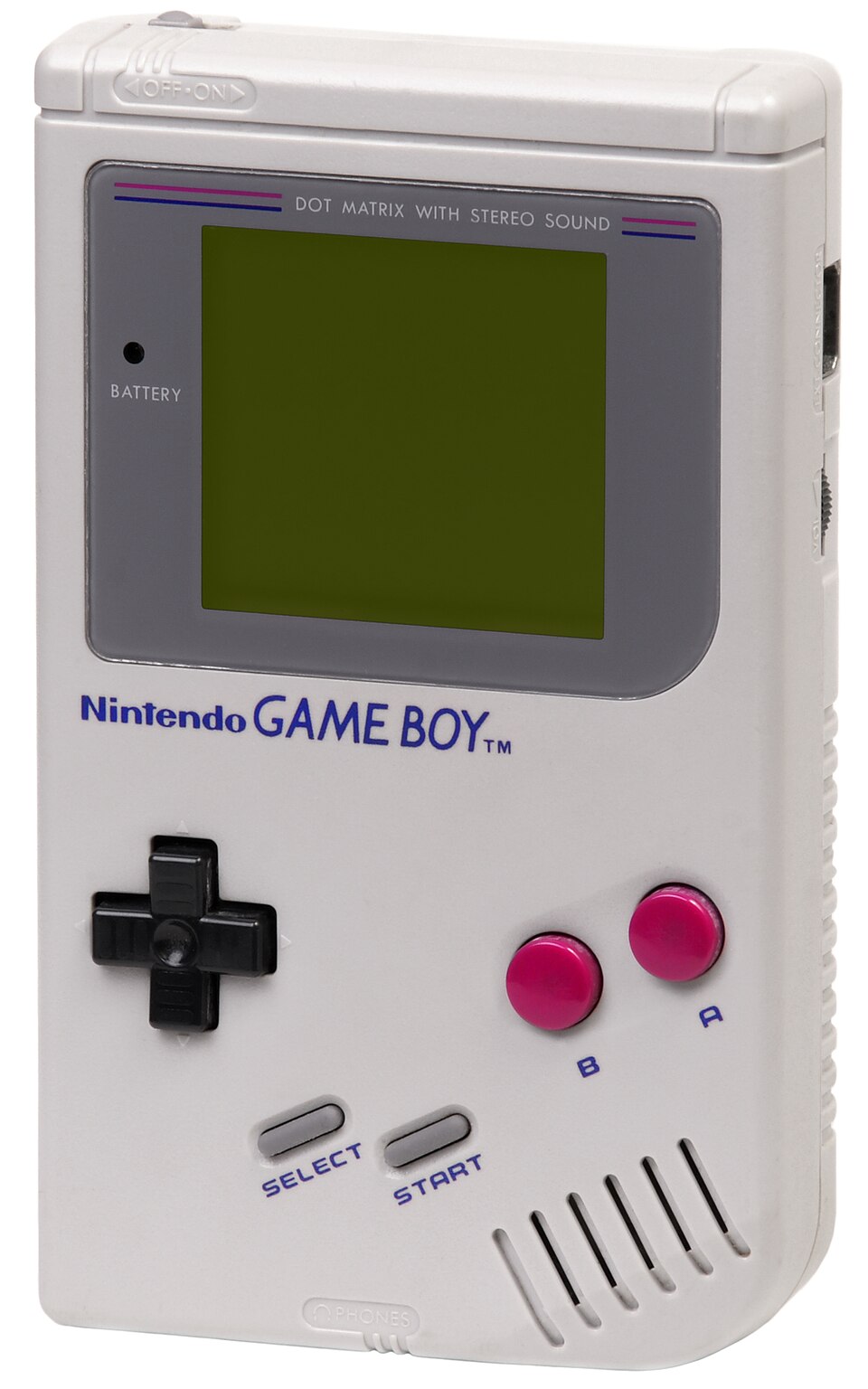
Technology history usually crowns the strongest specification sheet. Handheld history offers a better story. Nintendo’s Game Boy arrived in Japan in 1989 without colour graphics or arcade power. It was built around a harder promise: start when asked, last through the journey and survive ordinary life.
This is not nostalgia dressed as buying advice. The same choices confront a handheld buyer in 2026: brighter performance or longer battery life, a larger library or a lighter bag, console simplicity or PC flexibility. Game Boy cannot name today’s winner, but it can teach us how to choose one.
Before Game Boy, portability was still looking for its form
Nintendo’s Game & Watch line, launched in 1980, established that play could live in a pocket, but each unit generally delivered one fixed experience. Game Boy combined portability with interchangeable cartridges and an expanding library. You were no longer buying a portable game; you were buying a portable platform.
Nintendo’s corporate timeline places Game Boy in 1989, between the 1983 Famicom and 2001 Game Boy Advance. That matters because the product was not merely a shrunken home console. Its low power draw, familiar controls and tough, comprehensible body formed a category with its own rules.
The screen that surrendered colour and won the day
Game Boy’s 160×144 display rendered four shades of grey. Those modest numbers helped Nintendo quote roughly 15 hours from four AA batteries; the unit weighed about 300 grams with batteries. It was portable in the behavioural sense: people could keep it nearby and trust it to work.
The screen was not flawless. Motion blur and lighting limitations were real. The design’s strength was consistency, not perfection. Every compromise supported one promise—long sessions, understandable controls and dependable use. Less advanced technology became an advantage when it served the right job.
Tetris: the game that needed almost no cultural translation
The Computer History Museum identifies Tetris as central to Game Boy’s early success. It did not depend on dense language or a pre-existing character. Its rules could be read from motion, and a session could last two minutes or a train ride. The machine became a family object, a travel companion and a turn-taking competition—not only a children’s toy.
It is a rare hardware-software pairing in which each explains the other. Game Boy made Tetris personal and portable; Tetris proved that monochrome hardware could still host a timeless game. When evaluating a machine today, ask not only what it can run, but which game or library best explains why it exists.
Pocket, Advance, Switch: the idea changes without disappearing
Nintendo later reduced the body with Game Boy Pocket, then launched Game Boy Advance in 2001 with a 32-bit processor and 240×160 colour display. Nintendo’s support data lists around 15 hours from two AA batteries. Performance grew while quick access, reasonable endurance and a broad library remained central.
Switch eventually joined handheld and living-room play instead of treating them as separate markets. This is not a claim of one uninterrupted engineering line from Game Boy to Switch 2. It is a family resemblance in use: hardware thrives when it follows players to where they already want to play.
The modern bargain: more power, fewer predictable hours
Nintendo states that Switch 2 battery life is approximately 2–6.5 hours depending on software and functions. Valve lists Steam Deck OLED at about 640 grams with 3–12 hours of gameplay. Neither range names an absolute winner; both show that high-performance portable games renegotiate portability.
A device can be excellent on an aircraft and tiring on a standing commute, or superb for blockbuster games but dependent on a charger. Read the bottom of the official battery range, not only the top. Count the case, power supply and power bank in carried weight. Game Boy’s useful legacy is turning technical limits into practical buying questions.
What we do not know—and why the story needs no rumour
Old hardware attracts vivid anecdotes repeated decades later. Some may be true, but this article does not assign private motives or dialogue to designers without a clear primary source. We can verify the shipped object, its specifications, dates and institutional record.
‘The weaker machine won’ is therefore an analytical shorthand, not a laboratory verdict. Performance is not one dimension: endurance, portability, library strength and ease of use are powers too. Once strength is defined this way, Game Boy’s success becomes less mysterious and far more useful.
PLAYLORE FIELD NOTE
A sourced comparison: what do the numbers really say?
This is not a performance race across unrelated generations. It shows how the physical and energy cost of portable play has changed.| Machine | Display | Weight | Official battery range | Lesson |
|---|---|---|---|---|
| Game Boy | 160×144 · four shades | About 300g with batteries | About 15 hours | Design the job before the spec |
| Nintendo Switch 2 | Modern high-resolution display | See official system page | About 2–6.5 hours | Performance needs power planning |
| Steam Deck OLED | 1280×800 HDR OLED | About 640g | 3–12 hours | Flexibility varies with workload |
2026 BUYING GUIDE
A 2026 handheld buying checklist
Test the machine against your real day, not a specification video.- Write down the first three games you will play and confirm legal availability on the platform.
- Compare the bottom of the official battery range with half a day away from a socket.
- Count the case, charger and power bank in carried weight.
- If possible, hold a demo unit: check grip comfort, text size and fan noise.
- Add storage, subscriptions, controllers and adapters to the first-year cost.
- For Switch 2, do not buy an old microSD card: Nintendo specifies microSD Express only.
Three additions that serve the job—not the spec sheet
Practical categories for mobile players. Links open Amazon.sa search results; no unverified price or retailer image is shown.
Nintendo Switch 2 carrying case
Look for a firm shell and space for your charger; verify exact dimensions before ordering.
Search Amazon.samicroSD Express card
For Switch 2, verify the Express mark, capacity and warranty. Standard microSD cards cannot run Switch 2 games.
Search Amazon.saUSB-C PD power bank
Match PD output to your device, use a reputable cable and check airline battery rules before travel.
Search Amazon.saAs an Amazon Associate I earn from qualifying purchases.
Primary source
Sources and verification
Direct links to Nintendo, Valve and the Computer History Museum. Photograph supplied through Wikimedia Commons under public-domain terms.PLAYLORE VERDICT
The best machine is the one that survives your day
Game Boy was not an argument against progress. It was an argument against specifications detached from use. Screen, battery, weight and library agreed on one promise, so people actually carried it.
Look for that agreement in a handheld today. If the most powerful game cannot run when you need it, the power is theoretical. If the quieter machine opens quickly and finishes the journey, it has understood the lesson that began in 1989.