Genres · Rhythm-game culture
Why do your feet know the beat first? The secret design of rhythm games
From DanceDanceRevolution arrows underfoot to Taiko drums and Beat Saber blades: how rhythm games turned music into a language the body can read—and how to choose the right doorway today.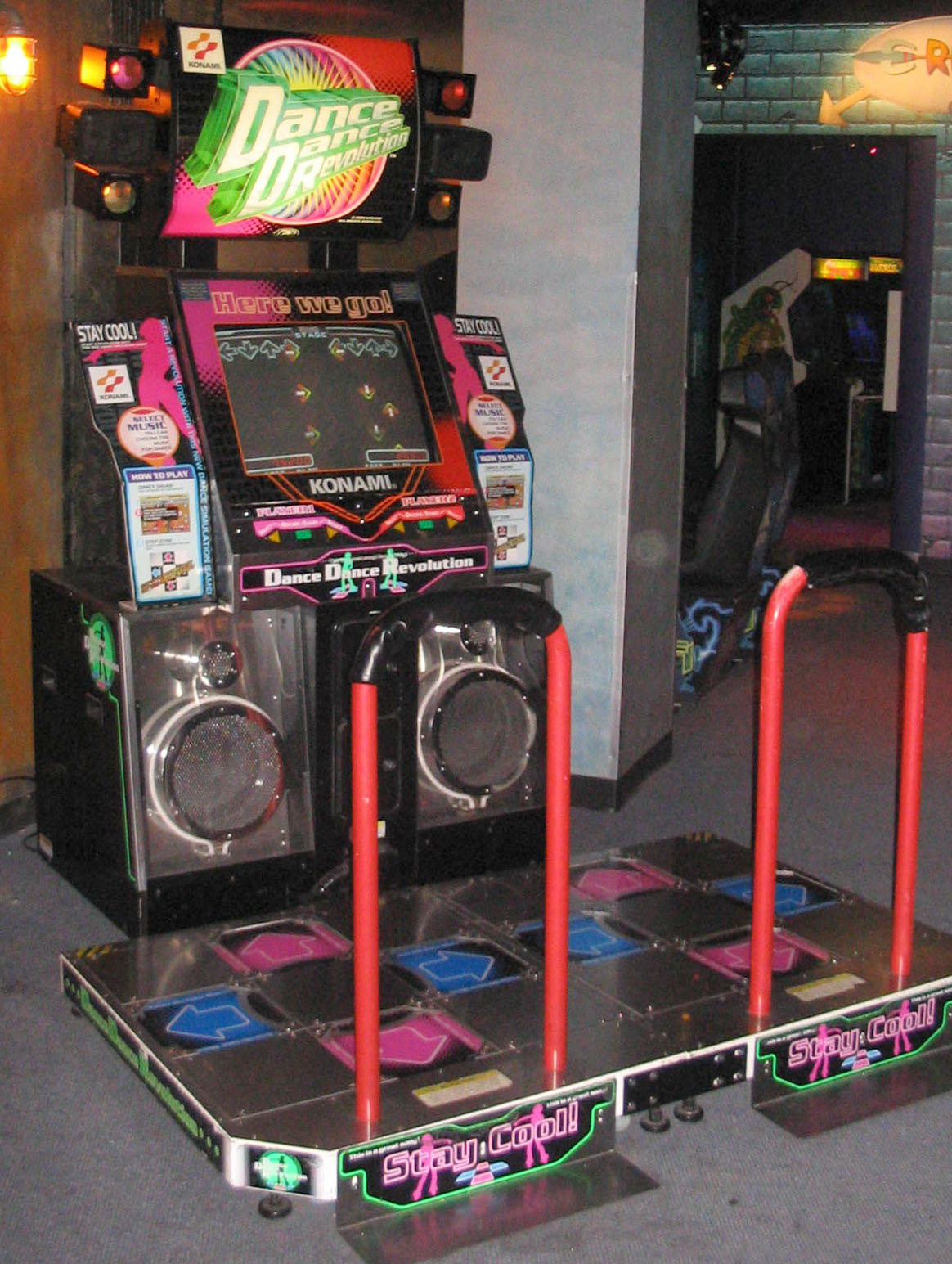
DanceDanceRevolution needs almost no lecture. An arrow rises, a foot moves, and sound confirms that you arrived on time. Thirty seconds later the button disappears from thought and the body starts anticipating the pulse. Rhythm games made timing itself the playfield instead of treating music as decoration.
Yet the genre is not one template. DDR writes music on the floor, Taiko divides it between drum face and rim, and Beat Saber builds lanes in three-dimensional space. Changing the input changes what you hear, what you learn and even the room you need.
The arrow that moved music from ear to foot
Konami dates DanceDanceRevolution’s Japanese arcade debut to September 1998. The premise is legible from across the room: follow the on-screen arrows and step on matching foot panels in time. That simplicity is information design, allowing a spectator to understand before paying for a turn.
Every move returns sound, light and score together. A miss does not stop the song; it exposes the gap between the beat you imagined and the beat the game measured. Repetition turns visual pursuit into physical anticipation.
Taiko: two strikes can build an entire world
Taiko no Tatsujin begins with drum face and rim. Few inputs become deep through speed, alternation and pattern. Rhythm Festival includes Improvement Support plus solo and group modes; Bandai Namco lists 76 base songs and a paid Music Pass that expands the library.
For Japanese readers, the drum connects to a familiar festival image. For newcomers elsewhere, the readable motion creates a cultural doorway without requiring fluency in Japanese. Motion can travel where lyrics cannot.
Beat Saber: when the note became an approaching object
Beat Saber moves sight-reading into VR: incoming blocks, cut direction and one colour per hand. Timing is not enough; the player prepares angle and path, producing the feeling of standing inside an arrangement without pretending to play a literal instrument.
Buying a modern music game also means buying a platform and a rights catalogue. Beat Saber’s FAQ says the game and older content remain playable and purchasable on PS4/PS5, but new PlayStation content ended after 18 June 2025 and multiplayer ended there on 26 February 2026. Cross-play currently continues between Meta Quest and Steam.
From arcade party to professional contest
Rhythm games were social before they were online: one player on stage, a queue learning by watching. Precision later became streamable and judgeable. Konami’s BEMANI PRO LEAGUE Season 4 DDR final followed 23 earlier matches and used six final matchups before a live audience and online broadcast.
Professional play does not cancel beginner joy; it reveals the length of the ladder. A rule understood in seconds can support years of timing, route reading and endurance. Great design shows the door without revealing the ceiling.
The costly myth: a rhythm game automatically teaches music
A game may sharpen attention to pulse and pattern, but it is not automatically instrumental practice, notation reading or ear training. It rewards what its designer measures. You can master a visual chart without being able to perform the song away from the screen.
Physical movement also does not make every setup suitable for every body or room. Begin comfortably, clear furniture, stabilise the surface and keep volume considerate. Follow qualified advice for an injury or health limitation rather than treating a difficulty level as therapy.
PLAYLORE FIELD NOTE
Which body language do you want to learn?
Choose by input, room and music—not franchise recognition alone.| Family | You read | You move | Best doorway | Check first |
|---|---|---|---|---|
| DanceDanceRevolution | Arrows and timing | Feet and body | Visible movement and social play | Space, mat stability, compatibility |
| Taiko no Tatsujin | Face/rim strikes | Alternating hands | Families and Japanese pop/anime fans | Drum noise and platform |
| Beat Saber | 3D blocks and direction | Arms and body in VR | Owners of compatible VR and clear space | Platform status, paid music, room |
STARTER GUIDE
The starter test before buying hardware
Buy the play shape that fits your home and library, not the loudest video.- Choose the platform first; match game, accessory and exact model.
- Measure real movement space and remove furniture and cables.
- Pick five songs you love and check whether they are base, DLC or subscription content.
- Check multiplayer and update status on your platform, especially Beat Saber on PlayStation.
- Plan for sound: headphones, drum strikes, footsteps and neighbours.
- Start at a difficulty that preserves accuracy and comfort; speed is not proof of learning.
Two tools—only when they serve the play
Amazon.sa comparison searches with no retailer imagery or unverified prices. Check platform, model number and room before purchase.
USB dance mat
Match platform and driver support, and choose a stable base for your floor.
Compare on Amazon.saTaiko controller
Verify whether the model is for Switch, PlayStation or PC; similar shells do not guarantee compatibility.
Compare on Amazon.saAs an Amazon Associate I earn from qualifying purchases.
Primary sources
Sources and verification
First-party pages support dates and platform status; the real arcade photo has a linked public-domain rights statement.PLAYLORE VERDICT
The best rhythm game lets you hear what you were missing
Arrow, drum and flying block are not skins on the same game. Each is a lens on music: feet reveal structure, hands learn alternation, VR draws direction in the air.
Begin with music you love and an input your home can hold. If the score briefly disappears and your body completes the phrase before the next marker, you have found why the genre still moves people after DDR first lit an arcade floor in 1998.