Countries · Korean play culture
Why didn’t smartphones kill Korea’s PC bangs? The room that became a platform
Mobile captures most Korean game revenue, yet the latest official white paper counted 7,243 PC cafés. This is not a nostalgia paradox—it is a lesson in bundling hardware, service and community into one product.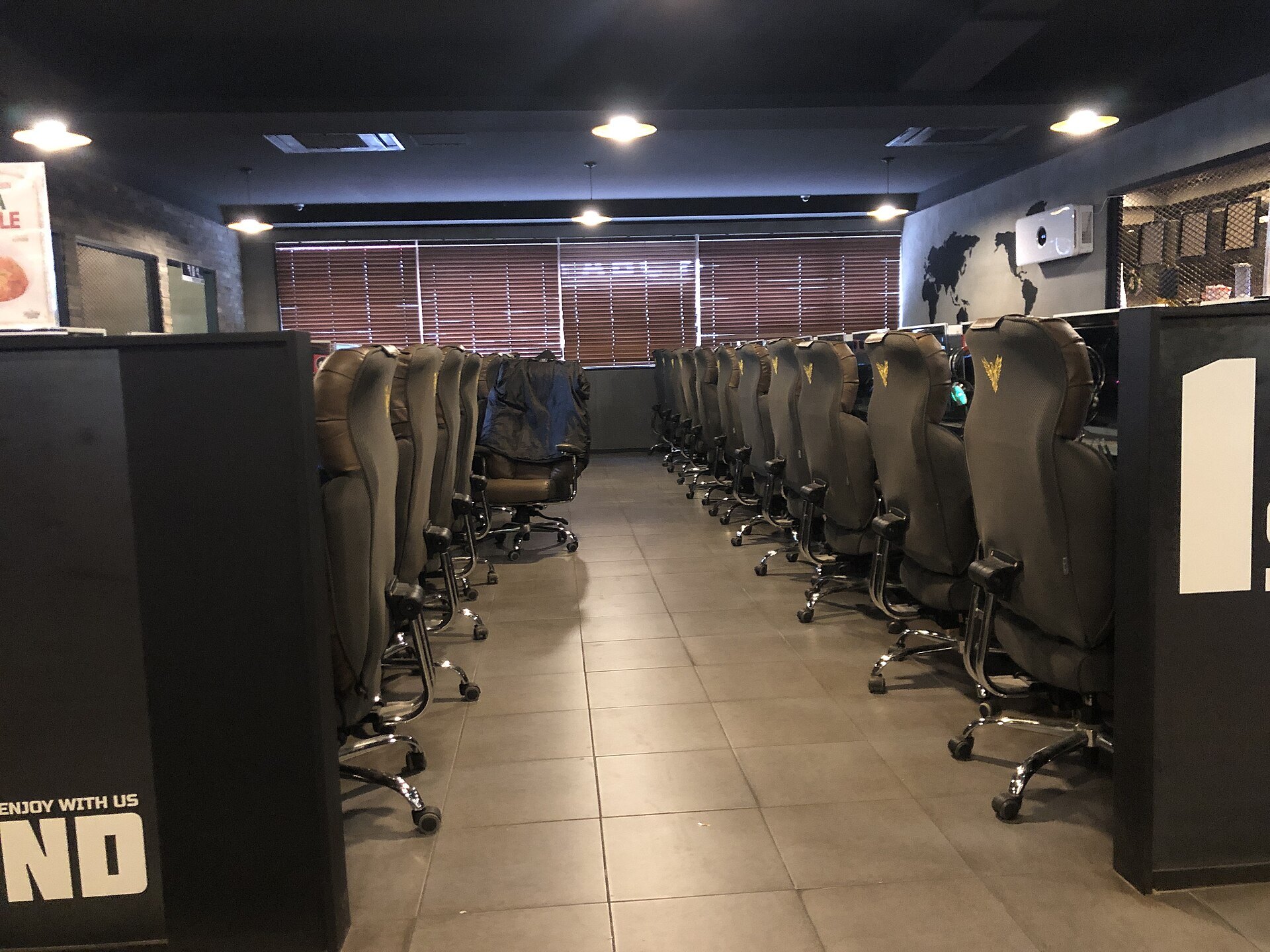
If technology moved in a straight line, the smartphone would have closed Korea’s last PC bang years ago. KOCCA’s 2025 Game Industry White Paper places two less tidy facts together: mobile represented 59% of Korea’s 2024 game market, while the industry still contained 7,243 PC cafés.
Korean players are not rejecting mobile. A PC bang simply sells more than a computer by the hour. It compresses hardware cost, maintenance, game access, a prepared seat and social presence into one session. Once the venue is read as a service platform, the paradox disappears.
Mobile won the revenue share, not every play occasion
KOCCA reports a domestic game market of KRW 23.8515 trillion in 2024, up 3.9%, with mobile at KRW 14.0710 trillion—or 59% of the total. These are market figures, not a clock measuring play time or a verdict on where every player prefers to be.
The same person can spend in a mobile game and meet friends at a PC bang for a competitive session. The formats do not always solve the same job. A phone excels at personal, intermittent access; a shared room sells focused time, ready hardware and co-presence.
A café is a distribution network, not only a row of PCs
Nexon’s current PC bang portal lets operators buy services, review payments and usage, and enrol in events. Riot describes participating venues as subscribers to a premium service with dedicated benefits. The invisible layer is a continuing commercial relationship between publisher, venue and player.
Riot’s Korean PC bang events in 2026 connected venue play to time-based missions, digital rewards and chances to attend esports finals; another event rewarded playing with friends. Processor power is therefore only part of the offer. Account benefits, events and the group activate the seat together.
What the player buys is low-friction time
A home PC asks you to buy components, display, storage, connectivity and maintenance up front. A PC bang turns that bundle into time purchased when needed. It is not automatically cheaper: a daily player may favour ownership, while a visitor, group or player testing better hardware may value flexibility.
The social layout is unusually precise. Friends sit close, yet each retains a personal screen, headset and account: a public room with partial digital privacy. Copying RGB chairs and a Korean name misses the operating system beneath it—reliable machines, comfort, account security, ventilation, food and behaviour management.
Seoul to New York: when a venue format becomes cultural content
In July 2026, KOCCA and the Korean Cultural Center New York announced a K-PC bang experience running through 22 August, combining Korean games, a cultural experience and business exchange. That remained the official published window at verification; it is one pilot, not evidence that the model works commercially everywhere.
Its significance is that Korea is exporting a way to play, not only a game title. Like karaoke or the arcade, the architecture of a venue can travel as culture. Outside Korea, however, wages, rent, licensing and local habits demand adaptation—not merely a translated sign.
The lazy myth: PC bangs are leftovers from slow-internet days
A familiar story says the venue exists only because people lack computers. KOCCA’s current count and publisher campaigns in 2026 do not prove every café is thriving. They do prove that the sector persists inside an advanced, mobile-led game economy, and that publishers still design offers around it.
A better description is an institution that keeps changing. Some value comes from hardware, some from operations, some from community and publisher programmes. The count may shrink and the format may change; current sources do not promise a trajectory. Survival to this point is fact. The future remains a scenario requiring new data.
PLAYLORE COUNTRY LENS
Phone, home PC and PC bang solve different jobs
This is not a platform war. Start with the occasion, then compare cost, convenience and privacy.| Occasion | Phone | Home PC | PC bang |
|---|---|---|---|
| Short solo session | Fastest access | May be excessive | More travel friction |
| Friends in one place | Easy, small screens | Needs several rigs and space | Designed for the case |
| Long daily play | Genre-dependent | Ownership may win long term | Hourly cost accumulates |
| Try hardware before buying | Cannot represent a PC | Requires purchase or borrowing | Useful when specs are disclosed |
| Privacy and account control | Personal device | Full control | Requires careful sign-out and no saved data |
VISITOR GUIDE
A no-surprises PC bang visit
Service varies by city and operator. Check the venue before signing in or buying a long block.- Check age, ID and entry-hour rules; legal and venue policies can change.
- Ask for hourly rates, bundles and minimums; do not assume food or premium benefits are included.
- Inspect the actual PC, monitor, headset and chair specifications—not only promotional photos.
- Use two-factor authentication, never save passwords, and sign out of the game, launcher and email.
- Avoid unnecessary USB storage and never move personal files onto a public machine.
- If you are sensitive to sound, light or smoke, inspect ventilation and zoning before paying.
Bring two useful ideas home—not the entire café
Two Amazon.sa search links for comparison, with no retailer images or unverified prices. Check size, connection, layout and warranty; do not buy the word ‘gaming’ alone.
Lightweight wired gaming mouse
The easiest personal tool to move between home and venue; compare weight, shape, sensor and button layout.
Compare on Amazon.saWired headset with a mute control
Useful for team play without charging friction; check comfort, connector and platform compatibility.
Compare on Amazon.saAs an Amazon Associate I earn from qualifying purchases.
Primary sources
Sources and verification
Data and programmes come from KOCCA, Riot Games and Nexon. The real photograph is CC0 and clearly dated. Pages were opened and checked on 18 August 2026.- KOCCA — 2025 Game Industry White Paper summary (2024 data)
- KOCCA — New York K-PC bang experience, summer 2026
- Riot Games Korea — 2026 Season 1 PC bang event
- Riot Games Korea — 2026 Season 2 PC bang event
- Nexon — PC bang operator-services portal
- Wikimedia Commons — South Korean PC bang photograph and CC0 rights
PLAYLORE ARCHIVE
Continue through the PlayLore archive
PLAYLORE VERDICT
When the room becomes part of the game
The PC bang is neither a rejection of mobile nor a shrine to the desktop. It shows that a platform can be a room, a service and a commercial relationship—not only a machine. That is how it can coexist with a mobile-led market rather than be wholly replaced by it.
The lesson for any city or gaming business is simple: do not begin with the number of PCs. Begin with why people gather, then design access time, comfort, security and content around that reason. Hardware ages; a good system makes returning rational.