Creators · Game design
Shigeru Miyamoto doesn’t start with the character: how movement becomes a game
Before Mario became an icon, jumping was an answer to a barrel. Before Pikmin became a world, it was a handful of verbs: throw, stick, carry. A sourced look at action-first design—without the lone-genius myth.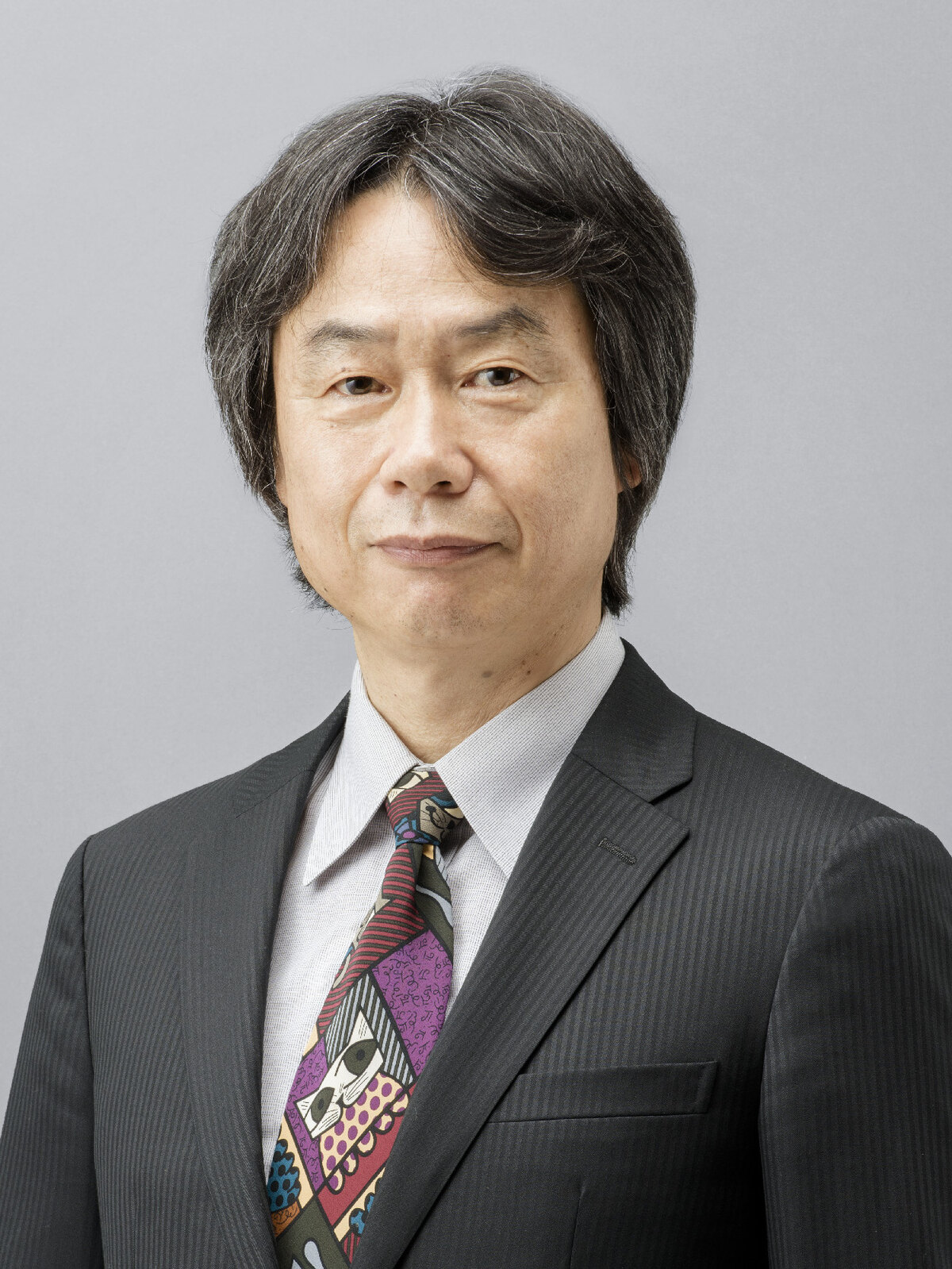
Game history is easily told as a parade of characters: Mario, Link, Pikmin. Nintendo’s own interviews tell a more useful story. The character does not always arrive fully formed and receive a game; identity often grows out of one physical action that survives a prototype.
This is not a secret recipe attributed to Miyamoto, and it is not an invitation to imitate Nintendo. It is a reading of documented decisions: jump solved a hazard and an elevator, Pikmin sticking to an enemy made a throw legible, and separating the second player’s role gave Super Mario Galaxy’s cooperation a purpose. The lesson is to connect input to consequence before decorating either.
The jump began as an answer to a barrel, not a brand identity
In Iwata Asks, Miyamoto recalls that Donkey Kong began closer to a maze and was initially imagined with joystick-only control even though the cabinet had a button. The practical question changed it: what should a player do when a barrel rolls towards them? The natural answer was to jump.
The team tried the button in a prototype and it worked. Jumping also made boarding vertical lifts easier. That is the elegant part: a strong action is not ornamental animation. It untangles more than one design problem and feels predictable to somebody who has not read a manual.
Pikmin: design what the creature does before explaining what it is
Nintendo’s Pikmin 4 interview credits a long chain of experiments by directors Shigefumi Hino and Masamichi Abe, programmer Yuji Kando, designer Junji Morii and others. Many characters and AI ideas were tested. The moments that excited the room came when thrown creatures stuck to an enemy and when they carried a defeated body home like ants.
Miyamoto explicitly says the approach was not ‘art-first’; design grew from Pikmin’s actions. When the scattered ideas needed a game, he made a flow diagram joining throwing, fighting, carrying and growth, while declaring what the team would not add. Creativity was not infinite accumulation. It was a loop people could build and understand.
Character is the consequence of a movement system
When Mario’s arc is readable, distance, platform and enemy form one sentence. When a Pikmin lands on a creature’s back or near its mouth, location creates meaning and danger. Character and physics are inseparable here: size, sound and expression should tell us what an actor can do and what just happened to it.
That does not make art or story secondary in value. Morii and Hino explain how visual exploration gave Pikmin its tender eeriness. The difference is test order. A beautiful design can be revised forever; an action gives an observable question—did the player press, understand the result and want to try again?
Good cooperation does not duplicate player one
Super Mario Galaxy’s interviews show Co-Star mode becoming coherent when the roles separated. The helper could freeze boulders and enemies with a pointer, collect Star Bits or guide a less experienced player. Some assistance was removed from solo play so the second person’s presence did something genuinely distinct.
For family design, asymmetry can be more welcoming than demanding identical skill. A child, parent or newcomer gets a clear input with real consequence while the main player keeps moving. Equal delight does not require equal buttons.
The myth of the man who made everything alone
Popular history compresses Mario, Zelda and Pikmin into one name. Miyamoto’s influence is extraordinary and documented; Nintendo currently lists him as Representative Director, Fellow. Yet the same primary sources dismantle the solitary factory. Designers, directors and programmers name who proposed, drew, implemented, resisted, tested and carried a decision across the line.
Miyamoto is more usefully read as designer, editor and producer inside teams, not a magician outside them. ‘Start with action’ does not erase artists or programmers; it gives them a shared test. For a new developer, that is more actionable than auteur worship: build something small, watch whether the verb reads, then let the team sharpen it.
PLAYLORE DESIGN LENS
Turn an idea into a testable verb
Replace an abstract pitch with a question a player can answer in front of you.| Design question | Weak prototype | Stronger prototype | Watch for |
|---|---|---|---|
| What is fun about the character? | Lore and drawings only | One verb, immediate consequence | Does the player repeat it unprompted? |
| How do I teach the rule? | Long text window | A safe hazard asking for the verb | Do cause and effect read? |
| Should we add this feature? | It sounds impressive | It solves two loop problems | Less friction or more? |
| How do we cooperate? | Duplicate the lead role | Different useful abilities | Can the newcomer matter? |
| When do we stop? | When ideas run out | When the loop is clear | Does every element serve the action? |
PROTOTYPE LAB
A six-pass movement lab for a small team
This is a PlayLore exercise inspired by the documented cases, not an official Nintendo methodology.- Write the game as one verb: jump, stick, pull, balance or coordinate.
- Build a grey room with one input and a visible consequence; postpone the character roster.
- Place a problem that makes the verb a natural answer, not a button searching for use.
- Ask the action to solve at least two knots, such as survival and reaching a platform.
- Let a new player try in silence; record the pause instead of explaining the solution.
- Keep what creates repeated understanding, then use art, sound and context to strengthen the read.
Study by playing, not by collecting
Text-only Amazon.sa search links with no retailer imagery or unverified prices. Confirm edition, region and device compatibility before buying.
Pikmin 4 for Nintendo Switch
Study how throwing, carrying and task allocation become a repeatable loop. That is an editorial lens, not a product-performance claim.
Compare on Amazon.saSuper Mario Bros. Wonder for Nintendo Switch
Observe how familiar movement is taught, then delightfully overturned inside short readable stages.
Compare on Amazon.saAs an Amazon Associate I earn from qualifying purchases.
Primary sources
Sources and verification
This article uses original Nintendo interviews and Nintendo’s current corporate role listing. The official portrait is licensed CC BY 4.0. Every page was opened and checked on 20 August 2026.- Nintendo — Ask the Developer: Pikmin’s origins and action design
- Nintendo — Iwata Asks: how Mario gained the jump
- Nintendo — Iwata Asks: building Super Mario Bros. around movement
- Nintendo — Iwata Asks: Co-Star and asymmetric roles
- Nintendo Corporate — board and Miyamoto’s current role
- Wikimedia Commons — official portrait and CC BY 4.0 terms
PLAYLORE ARCHIVE
Continue through the PlayLore archive
PLAYLORE VERDICT
Begin with the verb worth repeating
Gaming’s most famous characters did not endure because their biographies were long. They endured because touching them felt right. Jump answered the barrel, throwing became satisfying when the creature stuck, and cooperation made more sense when the second role differed.
You do not need Nintendo’s budget to test that principle. You need a verb, a problem and a result a real player can see. If they repeat it before final art arrives, the character may already be appearing.