Companies & technology · Game-development economics
Godot, Unity or Unreal? Choose a game engine by exit cost, not entry price
Free can cost time, paid tools can save it, and a royalty may never trigger. A practical test of team, platform and migration risk before the showcase dazzles you.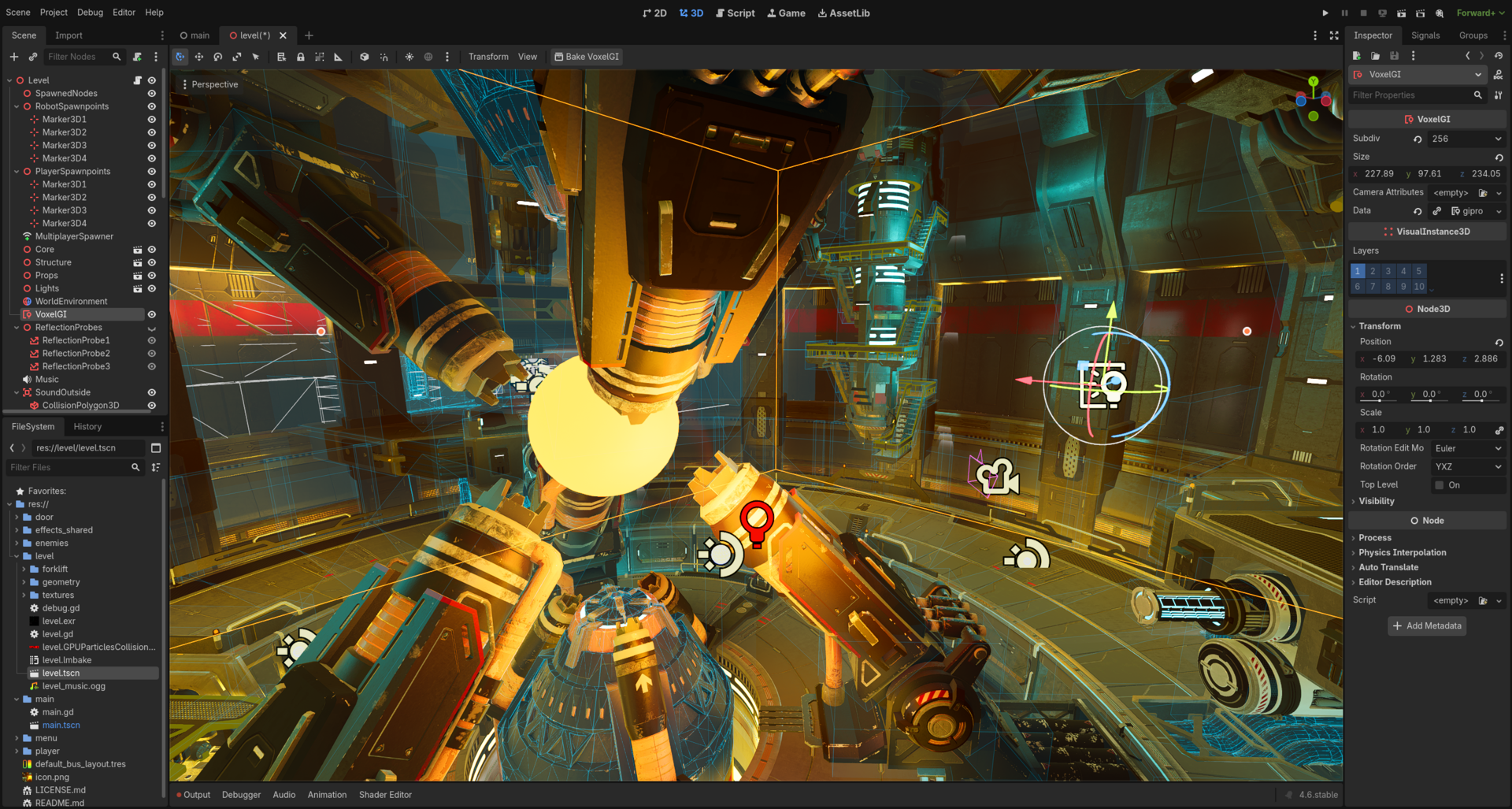
The wrong opening question is which engine makes prettier pictures. Art, code, budget and target hardware matter more than the logo. The useful question is which game your team can finish, update and perhaps move without the engine becoming a trap.
This is not a ranking of Godot, Unity and Unreal. It exposes four costs hidden behind Download: learning, collaboration, licence terms and exit. Published numbers are checked to 22 October 2026; fit is analysis that deserves a prototype.
Begin with a one-page game you can finish
Write the genre, camera, player count, target devices, team size and current skills. Remove anything the first release does not need. An engine proven on huge open worlds is not automatically the right tool for a two-person 2D puzzler.
Name the platform early. Godot documents third-party console port providers; Epic documents registered platform accounts and NDA-gated console resources. No export button bypasses the platform holder's approval.
Separate the invoice from the pricing model
Godot uses the permissive MIT licence and permits commercial modification and distribution with its notices. Unity Personal is free up to a published $200,000 annual revenue-and-funding threshold; Pro becomes mandatory above it, and Pro and Enterprise prices rose 5% from 12 January 2026. Unity's current editor terms state there is no runtime fee or revenue share for covered Unity projects.
Standard Unreal game terms apply 5% to worldwide gross revenue above a product's first $1 million lifetime gross revenue, with an eligible Launch Everywhere with Epic route at 3.5%. Do not compare $0 with 5% in isolation: count seats, plugins, build services, support, ports and engineering time.
Run a three-day race, not a three-week argument
Build the same slice in two finalists: one room, movement, UI, save, sound and a playable build on the weakest target. Record import time, build size, crashes and whether a second person can open it. Ignore showcase features your game will not use.
On day three force an awkward change: rename ten files, swap input logic and rebuild from a clean repository. The editor that charms in hour one may lose at merge or export. Keep measurements, not memories of a demo.
Price the exit before entering
Map where game logic, dialogue and data live, and whether their formats can be read outside the engine. Exclusive tools and abandoned plugins increase migration cost. That is not a ban on powerful tools; it is a reason to document dependencies and own an export and backup plan.
Write an exit rehearsal: one portable data file, a plugin-and-licence list, a copy of accepted engine terms and an archived offline build. If price or support changes, you can locate the exposure rather than rediscover the whole project.
Do not buy a roadmap
A roadmap reveals direction, not a shippable feature. Test a stable release your team can install today and inspect support for the plugins that can block launch.
Terms and thresholds can change after publication. Record the date and agreement link in project documents, then review before funding, pre-orders and release. No recommendation here relies on a leak or unannounced version.
PLAYLORE FIELD NOTE
A decision matrix that cannot choose for you
Score each row from 1–5 after a real prototype; weight any row that can block shipping twice.| Question | Measure | Warning |
|---|---|---|
| Can the team build quickly? | Time to a reviewable playable slice | Only one expert understands it |
| Can it reach the platform? | Real build, approval and support route | A promise or video |
| Is cost legible? | Seats, plugins, royalties, services | Nobody saved the terms |
| Can you leave? | Readable data and dependency list | Content locked in one plugin |
2026 ENGINE TEST
The engine test before commitment
Run this before expensive content production and keep the evidence with the project.- Build the same slice in two engines on the weakest target.
- Ask a second teammate to build from a clean repository.
- List every recurring or conditional cost and trigger.
- Verify each platform path with engine and platform-holder documents.
- Record plugin, font and asset licences—not only the engine licence.
- Export core data and archive a working build.
- Schedule a terms review before funding and launch.
Related reading
Two testing tools—not engine selectors
General Amazon.sa searches without retailer images or unverified prices. Buy only if the prototype really needs them.
Wired controller for input testing
Choose a layout supported by the target device and test disconnect/reconnect; shape does not prove console certification.
Compare on Amazon.saExternal SSD for a separate project copy
Check capacity, interface and warranty, and treat it as an extra copy—not the project's only home.
Compare on Amazon.saAs an Amazon Associate I earn from qualifying purchases.
Primary sources
Sources and verification log
Licence, price and platform claims use primary sources; the screenshot is documented free media, not an engine advertisement.PLAYLORE VERDICT
The right engine survives week three
Godot reduces licence constraint and exposes source; Unity sells an ecosystem and seats across stated revenue tiers; Unreal attaches a post-threshold royalty model to commercial games. These are real differences, not substitutes for your team's test.
Choose after a playable slice, a device build, a cost sheet and an exit rehearsal. Then the engine is an explainable, reviewable bet—not a badge of allegiance.